Cut My Art Learning Time in Half: The Hidden Feature That Made Me Independent
Remember how hard it felt to start painting online—endless tutorials, confusing tools, and that nagging doubt: “Can I really do this?” I felt the same—until one small, overlooked feature changed everything. It wasn’t flashy, but it quietly guided me from imitation to creating my own art with confidence. This is the story of how an ordinary tool helped me grow not just as an artist, but as someone more capable and self-reliant. It didn’t require new software, expensive courses, or even more time. It was already on my screen the whole time—just waiting for me to notice it.
The Moment I Almost Gave Up on Digital Painting
When I first downloaded a digital art app, I was so excited. I imagined myself painting soft watercolor skies, sketching my kids’ smiling faces, or designing little cards for friends. I watched tutorial after tutorial, taking notes like I was back in school. I followed every step—picked the exact brush, used the same colors, even zoomed in at the same moments. And when I finished? The result looked… okay. But only if I copied someone else. The second I tried to paint something on my own, everything fell apart. Lines wobbled. Colors clashed. I’d stare at the blank canvas, heart sinking, wondering why I couldn’t just create instead of mimic.
There was no one to blame—no harsh teacher, no unkind comment—but that quiet voice inside kept asking, “Are you really cut out for this?” I’d spend 20 minutes on a leaf, erase it, start over, erase again. Sometimes I’d close the app mid-session, defeated. I wasn’t lazy. I wanted to learn. But I was stuck in a loop: watch, copy, fail, repeat. I began to wonder if creativity was something you either had or didn’t. Maybe I just wasn’t one of the “artistic” ones. Sound familiar? If you’ve ever tried something new—knitting, cooking from scratch, learning an instrument—you know that early phase where effort doesn’t equal progress. It’s exhausting. And lonely.
What I didn’t realize then was that I wasn’t really learning how I painted. I was only learning how others painted. And while imitation is a natural first step, it can become a crutch. Without feedback on my own process, I had no way to improve beyond the next tutorial. I needed a mirror—not for my face, but for my actions. I needed to see what I was actually doing, not what I thought I was doing. And that’s exactly what I found, not in a course or a video, but in a tiny button buried in the settings menu.
Finding the Feature No One Talks About
One rainy Tuesday, I finished a small sketch of a teacup—nothing special—and instead of closing the app, I clicked around out of boredom. I’d done everything else: saved, shared, renamed. Then I saw it: “Playback.” Just two words, tucked under “Canvas” in the menu. I tapped it, and suddenly, my screen came alive. The blank canvas slowly filled, stroke by stroke, exactly as I had painted it. My brush moved backward and forward, my layers built up, my eraser danced across the rim of the cup. It was like watching a time-lapse of my own mind at work.
At first, I laughed. “Why would anyone want to watch themselves paint?” But then I paused it. I saw how I’d rushed the handle, how I’d hesitated on the shadow, how I’d switched brushes three times in one corner. I saw the moment I got frustrated and scribbled over part of the rim. And for the first time, I wasn’t guessing what went wrong—I was seeing it. No judgment, no criticism. Just truth. That playback wasn’t designed to teach. It was meant for sharing your process on social media. But for me, it became something deeper: a window into my own learning.
Think of it like this: when you learn to dance, you might follow a video. But if you record yourself and watch it back, you see the little things—your posture, your timing, the way you skip a step when nervous. That’s feedback you can’t get from just following along. The same happened with my painting. I wasn’t just consuming knowledge anymore. I was becoming aware of my own habits. And awareness, I learned, is the first step toward real growth.
How Watching Myself Paint Made Me Smarter
After that first playback, I started using it every time I painted. Just one click when I finished. No extra time, no pressure. But over time, something shifted. I began to notice patterns. I always started in the top left corner. I avoided curved lines. I used the same two brushes for everything, even when others would’ve worked better. I realized I wasn’t making thoughtful choices—I was on autopilot. I was reacting, not creating.
But here’s the beautiful part: once I saw those patterns, I could change them. The next time, I’d start in a different place. I’d force myself to draw one smooth curve, even if it wasn’t perfect. I’d try a new brush for shadows. And when I played it back? I could see the improvement. Not dramatic, but real. This is what experts call metacognition—thinking about your own thinking. It’s not just doing something; it’s understanding how and why you do it. And that kind of awareness builds confidence faster than any compliment.
Let me give you a real example. One evening, I painted a simple flower. When I played it back, I noticed I kept lifting my pen too early, leaving broken lines. I rewound and watched it three times. The next day, I practiced just that—one continuous stroke for a petal. I didn’t worry about the color or shape. Just the motion. And when I painted another flower, I saw in the playback that my lines were smoother. I hadn’t changed my talent. I’d changed my attention. That’s the power of self-review. It turns mistakes into lessons, not failures. It’s like having a kind, patient teacher who knows exactly what you did and when you struggled—because it’s you.
From Imitation to Creation: Gaining Creative Confidence
The biggest change wasn’t in my technique. It was in my courage. Before, I was afraid to try anything unless I knew the “right” way. I’d look up “how to draw a cat” or “easy landscape tutorial” and follow it exactly. But after months of playback reviews, I started experimenting. One afternoon, I mixed colors just to see what would happen. I used a textured brush on the sky, something I’d never seen in a tutorial. I painted a tree with purple bark. And when it looked “wrong,” I didn’t delete it. I played it back. I asked, “Why did I make that choice? What was I trying to express?”
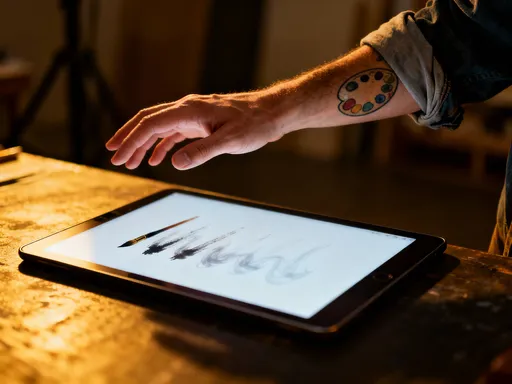
And then came the moment I’ll never forget. I decided to paint my garden—just how I saw it one quiet morning. No reference. No tutorial. Just me, my tablet, and the memory of sunlight on the roses. When I finished, I held my breath and pressed “Playback.” I watched myself build the scene: the crooked fence, the oversize daisies, the way I added gold specks to the grass. It wasn’t perfect. But it was mine. And for the first time, I felt proud—without waiting for someone to say, “Nice job.” I didn’t need permission anymore. I had learned to trust my own eye, my own hand, my own voice.
That’s the real gift of this simple feature. It didn’t just teach me to paint better. It taught me to believe in my ability to learn. Every playback was proof: “You tried. You saw. You adjusted. You grew.” That cycle—action, reflection, improvement—is the heart of all real learning. And once you experience it, you start to think, “If I can do this, what else can I figure out on my own?”
Building a Habit That Fits Real Life
One of the reasons this worked for me is that it didn’t feel like extra work. I didn’t need to set aside more time or buy new tools. I just added one tiny step to my routine: after I saved my painting, I pressed “Playback” and watched it once. Sometimes I’d take notes—“Work on smoother curves,” “Try darker outlines”—but mostly, I just observed. It became as natural as stretching after a walk or rinsing my brush before bed.
If you’re using a common digital art app like Procreate, Adobe Fresco, or even the drawing tools in some note-taking apps, chances are you already have this feature. In Procreate, it’s under the wrench icon, then “Video,” then “Time-lapse Replay.” In Fresco, it’s in the “History” panel. You don’t need to export or share it—just play it on your own device. And you don’t have to watch the whole thing. Focus on the parts where you felt stuck or rushed. Ask yourself: “What was I avoiding? What felt hard? What did I do differently when I was in the flow?”
I also found it helpful to review every few weeks. I’d go back and watch an old playback next to a recent one. The difference was always surprising. I’d see how my strokes had become more confident, how I used layers more intentionally, how I didn’t panic when I made a mistake. Progress isn’t always visible in the final image—but it’s always visible in the process. And that’s what keeps you going. You realize you’re not the same artist you were three months ago. You’re learning. You’re growing. And you’re doing it on your own terms.
Why This Helps Beyond Painting
The confidence I gained from watching my own art process started to spill into other parts of my life. I began to approach small challenges differently. When I tried a new recipe and it didn’t turn out, I didn’t throw it away and give up. I thought, “What happened? Where did I rush? What could I adjust next time?” It was the same mindset: observe, reflect, improve. I started planning my week with more intention, not just reacting to what came up. I even found myself making decisions—about my schedule, my purchases, my time—with more clarity, because I’d learned to trust my own judgment.
As a mom, a partner, a friend, we’re often taught to look outside for answers. What does the expert say? What does the article recommend? What do others think I should do? And while advice is helpful, it can’t replace self-knowledge. The playback feature taught me that the most powerful feedback doesn’t come from others—it comes from paying attention to your own actions. When you learn to see yourself clearly, you stop needing constant validation. You start to trust your instincts. You become your own guide.
This isn’t just about art. It’s about any skill you’re trying to grow—organizing your home, managing your time, learning to cook, even building a small side project. The tools are already there. The answers are often within your own experience. You just need a way to see them. And that’s what technology, at its best, can offer: not flashy shortcuts, but quiet support for your personal growth. It’s not about replacing effort. It’s about making your effort more meaningful.
A Simpler Way to Grow Without Pressure
You don’t need to be talented. You don’t need the latest tablet or a fancy app. You don’t need hours of free time. All you need is the willingness to watch yourself try. That’s it. The playback feature didn’t make me a perfect artist. It made me a more aware one. And awareness is where real change begins. It’s not loud or dramatic. It’s quiet. It’s consistent. It’s kind.
I used to think growth meant big leaps—finishing a masterpiece, getting praise, finally “arriving.” But now I see it differently. Growth is in the small moments: the decision to watch your own process, the courage to notice a flaw, the patience to try again. It’s in the way you start to trust yourself a little more each day. Technology doesn’t have to be complex to be powerful. Sometimes, the most transformative tools are the ones we overlook—the quiet features that help us see ourselves more clearly, learn from our own experience, and grow at our own pace.
So if you’ve been waiting to start, or if you’ve started and feel stuck, I want to tell you this: you don’t need more instruction. You need more self-awareness. Press play on your journey. Watch your strokes, your choices, your progress. Don’t look away from the messy parts. They’re not failures—they’re data. They’re proof that you’re trying. And every time you review, adjust, and keep going, you’re not just learning a skill. You’re becoming someone who can learn anything. Your future self is already creating. Will you take a moment to watch them?